Fear or Faith

When we want something, we usually turn to God, pray about it and receive a promise from Him. It may be the job we prayed for, the house we needed, a college admission for our child, a new door for ministry, or the salvation of someone in our family. Then we see the first signs that God is moving.
After some time, we start seeing things that are the opposite of what God promised or what we hoped for. The marriage hits a struggle. The job brings more challenges than we expected. Buying the house turns into a battle. Slowly, the thing God showed us begins to look too big, too risky and too far away.
So we step back and start depending on ourselves. Worry and anxiety take over. The fear of whether we will succeed rises again and again. We lean on our own strength and reach out to friends and family for advice to get through the struggle. The fear and anxiety never leave. It spirals from one challenge to the next, until we are stalled.
We did not lose that promise because the enemy was strong. We lost it because fear spoke louder than God’s word, and we listened. Without knowing it, we handed the keys of our promise back to the enemy.
This is exactly what happened to Israel at the edge of Canaan. They saw the promised land. They held its fruit in their hands. And still they walked away. The Israelites lost the promise God had given them because fear opened the door to unfaithfulness toward God. Numbers 13 and 14 put the same question to us today: fear or faith?
"I Am Giving" — The Promise Came First
[Numbers 13:1-2 NIV] 1 The LORD said to Moses, 2 "Send some men to explore the land of Canaan, which I am giving to the Israelites. From each ancestral tribe send one of its leaders."
God did not say, “I will give it if you can manage.” He said, “I am giving.” The land was a gift before a single step was taken.
When God speaks a promise, it is as good as done.
But before they received it, God gave them a test. He asked for one leader from each tribe to go and explore the land.
The exploring was not to decide whether to take the land. It was to get them ready to receive it.
God had already gone ahead of them. Moses later reminded them that it was the LORD [Deuteronomy 1:33 NIV] 33 who went ahead of you on your journey, in fire by night and in a cloud by day, to search out places for you to camp and to show you the way you should go.
Lesson to Learn:
God’s promise means it’s done - [Numbers 23:19 NIV] 19 God is not human, that he should lie, not a human being, that he should change his mind. Does he speak and then not act? Does he promise and not fulfill?
God gives us many test before we inherit the promise, test is not to delay or disqualify, but to qualify and earn to receive the same.
Sent to Explore, Not to Decide
Moses gave the twelve leaders a clear brief before they left.
[Numbers 13:17-20 NIV] 17 When Moses sent them to explore Canaan, he said, "Go up through the Negev and on into the hill country. 18 See what the land is like and whether the people who live there are strong or weak, few or many. 19 What kind of land do they live in? Is it good or bad? What kind of towns do they live in? Are they unwalled or fortified? 20 How is the soil? Is it fertile or poor? Are there trees in it or not? Do your best to bring back some of the fruit of the land." (It was the season for the first ripe grapes.)
This was not a sightseeing trip. It was a scouting mission into enemy-held land that God had already given them. And God gave them forty days to look properly (13:25), not a quick visit.
They were to look at three things: the people (strong or weak, few or many), the land and its cities (good or bad, open or walled) and the fruit (bring some back).
It is the same with us. Many times God shows us the promise, but between us and that promise stand obstacles: in people, in the land around us and in our own fruit. God expects us to see them clearly and deal with them in prayer before He hands the promise over.
The People — Who Stands Between You and the Promise
At the office, it may be a manager who blocks your growth, or colleagues who mock your work or lead you in the wrong direction. At home, it may be a family member who discourages your faith in Christ. In ministry, it may be the people around you. The enemy uses the people around us as weapons. The people are not the real problem; the enemy who is behind this is the problem. Just as God uses His believers as His instruments, Satan uses people to rise against God’s people, to counter God’s plan and work against what God has purposed.
Learn from Moses and ask his questions. Are they strong or weak? Are they a few voices, or the whole system? Then pray for them by name, because God can turn any heart.. [Proverbs 21:1 NIV] 1 In the LORD's hand the king's heart is a stream of water that he channels toward all who please him.
The Land and Its Cities — What Surrounds the Promise
The land is our environment: the workplace culture, our finances, our neighbourhood, the traditions in our family.
The walled cities are the long-standing patterns that have stood for years: a debt that never seems to end, a habit passed down through generations, a culture of compromise at work where "everyone does it". Some of these walls look as if they reach the sky.
Unless the walls are broken the promise to get that is not possible.
The Fruit — What God Expects to Grow in Us
Before God hands over a promise, He looks for fruit in us: faith, obedience, character and faithfulness with what we already have, without that fruits, how can god trust us to give even bigger assignments.
A promotion needs integrity to carry it. A ministry needs humility. A family member’s salvation needs our witness and living testimony at home first. [Luke 16:10 NIV] 10 Whoever can be trusted with very little can also be trusted with much, and whoever is dishonest with very little will also be dishonest with much.
Lesson to Learn:
How do we look at all three? Only through prayer can we break these three strongholds.
Hold on to the promise God has given you. Promise is Key remember who God is - [Numbers 23:19 NIV]
Identify the strongholds that stand against it: the people, the land and its cities, and the fruit that is still missing from your own inner life.
Lay each one at God’s feet and ask Him to break it. Start with the fruit first. Once our own self is broken before God, the other walls come down much more easily, because God fights for what is righteous. When we deal with what blocks righteousness in us, we no longer fight in our own strength. We fight in the armour of God, and the walls break.
Without God’s help, we cannot break these strongholds on our own.
[2 Corinthians 10:4 NIV] 4 The weapons we fight with are not the weapons of the world. On the contrary, they have divine power to demolish strongholds.
Same Facts, Two Reports
After forty days the twelve came back and stood before Moses and the whole community.
[Numbers 13:27-33 NIV] 27 They gave Moses this account: "We went into the land to which you sent us, and it does flow with milk and honey! Here is its fruit. 28 But the people who live there are powerful, and the cities are fortified and very large. We even saw descendants of Anak there. 29 The Amalekites live in the Negev; the Hittites, Jebusites and Amorites live in the hill country; and the Canaanites live near the sea and along the Jordan." 30 Then Caleb silenced the people before Moses and said, "We should go up and take possession of the land, for we can certainly do it." 31 But the men who had gone up with him said, "We can't attack those people; they are stronger than we are." 32 And they spread among the Israelites a bad report about the land they had explored. They said, "The land we explored devours those living in it. All the people we saw there are of great size. 33 We saw the Nephilim there (the descendants of Anak come from the Nephilim). We seemed like grasshoppers in our own eyes, and we looked the same to them."
They looked at the same three things Moses asked about, and fear twisted each one.
The People
What they saw: powerful people and the descendants of Anak. That was a fact.
What fear added: "They are stronger than we are... we seemed like grasshoppers in our own eyes." They were sent to look at the enemy, and they came back measuring themselves.
The Land and Its Cities
What they saw: a land flowing with milk and honey, and cities that were large and fortified. Both were facts.
What fear added: "The land devours those living in it." That was not a fact. The same land cannot flow with milk and honey and also eat up its people.
The Fruit
What they saw: one cluster of grapes so big it took two men to carry it on a pole (13:23). You cannot argue with that. The fruit was God’s evidence against their fear.
What fear did: they carried the fruit back and then talked as if it did not exist.
They measured themselves against the giants. They never measured the giants against God.
[Isaiah 40:22 NIV] 22 He sits enthroned above the circle of the earth, and its people are like grasshoppers. He stretches out the heavens like a canopy, and spreads them out like a tent to live in.
They also assumed the enemy saw them as grasshoppers. Forty years later, Rahab told the next generation what Canaan had really been feeling all along.
[Joshua 2:9 NIV] 9 and said to them, "I know that the LORD has given you this land and that a great fear of you has fallen on us, so that all who live in this country are melting in fear because of you.
The enemy was melting in fear while Israel was melting in fear of the enemy. Here is how the two reports compare:
The Ten | The Two (Joshua & Caleb) |
Saw the giants | Saw the promise |
"We can’t attack those people" | "We can certainly do it" |
"The land devours those living in it" | "We will devour them" |
"We seemed like grasshoppers" | "The LORD is with us" |
Spread a bad report | Tore their clothes and pleaded |
Died of a plague (14:37) | Entered the land; Caleb took Hebron |
Lesson to Learn:
When we look at the people: we look at the boss, the relatives or the people who oppose us, and we come back saying, “They are too strong. How can I stand against them?” The other side may well be strong. What we see is not unreal, and our God is practical about it. But in that moment, do we say, “I see that they are strong, but my God is bigger than the people I am dealing with”? That is what God expects from us.
When we look at the fruit: look at the compromises and adjustments you have made that are blocking God’s plans.
When we look at the land: do not look at what you do not have. Look at what God can provide. He is the king of earth, all things are created for him and in him.
Do not measure yourself against the giant. Measure the giant against God. Breaking the enemy is God’s job, because He has promised to give us what we need. Too often we take that problem into our own hands and do not let God fight for us.
Pray to have the Spirit of (Joshual & Caleb) to in you as walk with God.
Handing the Keys to the Enemy
The enemy’s biggest asset is fear. He cannot take away what God has given, so he works to make us hand it back. Our physical eyes see the giants. The promise can only be seen with the eyes of faith. When fear takes over, we give the key back to Satan, and he rules over what God meant for us.
The enemies the spies saw are the same kinds of fear we face today:
The Anakim — "I am too small." The giants did not just look big. They made the spies feel small in who they were. This is the enemy’s attack on our identity.
The Amalekites — the attack at the entry. They lived in the Negev (13:29), the very road Moses told them to take. The opposition often comes the moment we start: the first step of obedience, the first prayer meeting at home.
The Canaanites — the system around us. The culture, the traditions and the "everyone does this" that tell us God’s way will not work here.
The fortified cities — the wall with no natural answer. A debt, an illness, a hard heart in the family. Later, Jericho’s walls fell not by military strategy but by obeying God’s word (Joshua 6).
[2 Timothy 1:7 NIV] 7 For the Spirit God gave us does not make us timid, but gives us power, love and self-discipline.
Lesson to Learn:
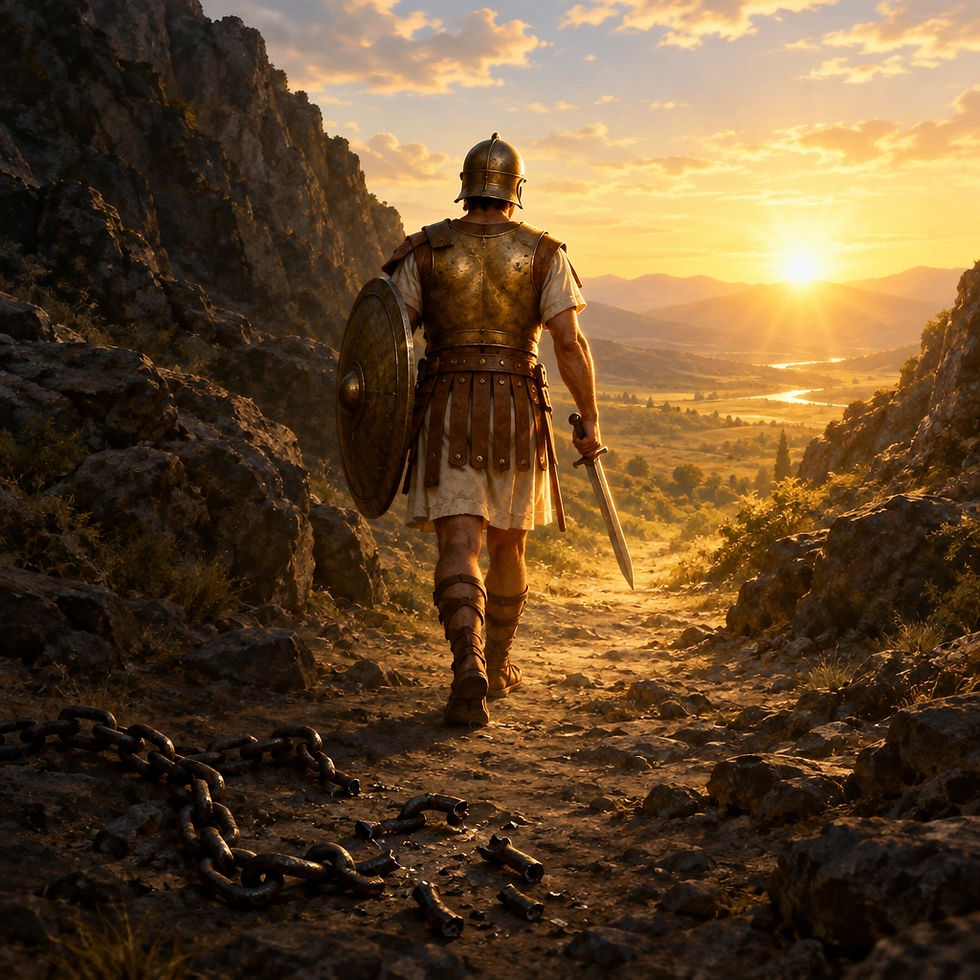
Fear is not only a feeling. It is a key, and we decide who holds it.
Fear stems from Anxiety of situation to depend on Self, that gives room for Fear. The more you are anxious on situation you give the fear key to Satan – See God’s promise in Mattew on anxiety - [Matthew 6:31-34 NIV] – 31 So do not worry, saying, 'What shall we eat?' or 'What shall we drink?' or 'What shall we wear?' 32 For the pagans run after all these things, and your heavenly Father knows that you need them. 33 But seek first his kingdom and his righteousness, and all these things will be given to you as well. 34 Therefore do not worry about tomorrow, for tomorrow will worry about itself. Each day has enough trouble of its own.
Name your giant, then name your God. [1 John 4:4 NIV] 4 ...the one who is in you is greater than the one who is in the world.
What can Fear bring to us ?
We learn from the Israelites experience on what this Fear can bring - The bad report did not stay with ten men. It spread through the whole camp in one night.
[Numbers 14:1-4 NIV] 1 That night all the members of the community raised their voices and wept aloud. 2 All the Israelites grumbled against Moses and Aaron, and the whole assembly said to them, "If only we had died in Egypt! Or in this wilderness! 3 Why is the LORD bringing us to this land only to let us fall by the sword? Our wives and children will be taken as plunder. Wouldn't it be better for us to go back to Egypt?" 4 And they said to each other, "We should choose a leader and go back to Egypt."
They wept: they cried the whole night, as if someone had died.
A grumbling spirit against God: they grumbled against Moses and Aaron, but in their tents they were really accusing God: “The LORD hates us” (Deuteronomy 1:27).
They forgot what God had done: the plagues, the Red Sea, the manna, the water from the rock, the cloud by day and the fire by night. They had seen it all, and they forgot it all.
They looked back to Egypt: they said Egypt was better. Slavery looked safer than the promise.
They rejected God’s leaders: they wanted a new leader to take them back, and they talked about stoning Joshua and Caleb, the two who spoke for God (14:10).
See how God see this through His own eyes ? Here God named what was really going on. Just as we feel hurt when people treat us with contempt, God feels the same way about us when we carry these spirits within us. [Numbers 14:11 NIV] 11 The LORD said to Moses, "How long will these people treat me with contempt? How long will they refuse to believe in me, in spite of all the signs I have performed among them?
Fear grew into unbelief, and unbelief grew into rebellion then to the sin of unfaithfulness. We have our own versions: "How long will I suffer due to this ?" "Is God listening to my prayer ? " "What did I do to go thru this struggle ? The complaining is at every place we go, it spreads a bad aroma to defeat God’s plan for us.
Lesson to Learn:
Fear opens the door for Satan to bring new troubles into our lives and to draw us away from God. God says stand against him he will run away, he is a coward - [1 Peter 5:9 NIV] – 9 Resist him, standing firm in the faith, because you know that the family of believers throughout the world is undergoing the same kind of sufferings.
Fear brings a complaining spirit against God: grumbling, rejecting Him, depending on ourselves and accusing Him. These are Satan’s own qualities, and he works to build his character in us.
Now the battle is no longer against fear alone. Before we can inherit God’s plans, we have to overcome these four or five other spirits as well.
Fear also spreads like fire to others and dishonours God’s name. People in our inner circle watch and mock: “You went to God, and this is what you got.” But it is not that God did not give. We lost it because of our own lack of faith.
Fear to Unfaithfulness and its impacts
The journey from Horeb to Kadesh Barnea took eleven days (Deuteronomy 1:2). Because of their unbelief, the journey into the land took forty years.
[Numbers 14:33-34 NIV] 33 Your children will be shepherds here for forty years, suffering for your unfaithfulness, until the last of your bodies lies in the wilderness. 34 For forty years—one year for each of the forty days you explored the land—you will suffer for your sins and know what it is like to have me against you.'
It was never God’s plan to keep them in the wilderness. His plan was "I am giving." The forty years came from God’s anger over their unfaithfulness.
[Numbers 32:13 NIV] 13 The LORD's anger burned against Israel and he made them wander in the wilderness forty years, until the whole generation of those who had done evil in his sight was gone.
They received what they spoke. They had said, "If only we had died in this wilderness!" God answered, [Numbers 14:28 NIV] 28 So tell them, 'As surely as I live, declares the LORD, I will do to you the very thing I heard you say:
The ten men who spread the bad report died of a plague (14:37). The next morning the people tried to go up without God, and the same Amalekites and Canaanites they had feared beat them back (14:44-45).
The New Testament gives the verdict plainly: [Hebrews 3:19 NIV] 19 So we see that they were not able to enter, because of their unbelief.
This is very much the same in our lives. We blame God for many missed blessings. "God did not open the door." "Maybe it was not His will." But many times the door was open, and we did not walk through it. The promise did not fail. Our faith did. The unfaithfulness that comes from fear is what causes so many missed promises.
Yet God’s promise did not die. The children they had used as their excuse inherited the land: [Numbers 14:31 NIV] 31 As for your children that you said would be taken as plunder, I will bring them in to enjoy the land you have rejected.
Lesson to Learn:
Not every delay is God’s will. Some wilderness years are the fruit of our own unbelief.
Before you blame God for a missed blessing, look inside and cast all the fear’s away and all he inner spirits that you gave room for ?
God’s promise does not die. It waits for someone who will believe it.
A Different Spirit — The Faith Warriors (Caleb and Joshua)
In the middle of the crying crowd, two men stood up.
[Numbers 14:6-9 NIV] 6 Joshua son of Nun and Caleb son of Jephunneh, who were among those who had explored the land, tore their clothes 7 and said to the entire Israelite assembly, "The land we passed through and explored is exceedingly good. 8 If the LORD is pleased with us, he will lead us into that land, a land flowing with milk and honey, and will give it to us. 9 Only do not rebel against the LORD. And do not be afraid of the people of the land, because we will devour them. Their protection is gone, but the LORD is with us. Do not be afraid of them."
The ten saw the giants and forgot the promise. The two saw the promise and walked past the giants.
The ten said the land "devours" its people. Joshua and Caleb turned it around: "we will devour them." The enemy is not food for fear. The enemy is bread for faith.
They tore their clothes. They were grieving over the people’s unbelief, not just making a speech.
God saw what was different about Caleb.
[Numbers 14:24 NIV] 24 But because my servant Caleb has a different spirit and follows me wholeheartedly, I will bring him into the land he went to, and his descendants will inherit it.
Forty-five years later, at the age of 85, Caleb asked for the very hill country where the spies had seen the giants.[Joshua 14:12 NIV] 12 Now give me this hill country that the LORD promised me that day. You yourself heard then that the Anakites were there and their cities were large and fortified, but, the LORD helping me, I will drive them out just as he said.
He drove out Sheshai, Ahiman and Talmai, the same three giants the spies had seen at Hebron (Joshua 15:14; Numbers 13:22). The giants that made ten men feel like grasshoppers fell before one man who believed.
The next generation, the children of the wilderness, entered the land with Joshua. They became the faith warriors their parents refused to be.
Lesson to Learn:
Faith does not deny the giants. It sees God as bigger.
Age and delay do not cancel a promise. Caleb waited forty-five years and still asked for the mountain.
Praying Back the Promise
We may never march through the Negev or cross the Jordan. But God still says "I am giving" to His people: promises for our families, our work, our health, our ministry and our nation. We take hold of them the same way Joshua and Caleb did, through prayer and faith. Walk back through the journey in prayer:
Hold on to what God has said. Write down the promise He has given you. God does not change His mind, and His "I am giving" still stands.
Knees to Fight against the mighty. Name the people, the walls and the fruit that is still missing in you. Start with the fruit, and let God deal with you first.
Read the facts with faith. See the giants, but measure them against God. Hold up the fruit you already have: your own Red Sea and your own manna.
Take back the key from fear. When anxiety rises, give it to God instead of handing it to the enemy. Speak faith, not fear, at home, at the office and in prayer. God hears what we say (Numbers 14:28).
Close the door on what fear brings. Confess the grumbling, the looking back to Egypt and the accusing of God, and do not give those spirits room again.
Ask for a different spirit. Pray for the spirit of Joshua and Caleb: to follow the LORD wholeheartedly and to walk with His presence, not ahead of it and not behind it.
And when we pray, we pray as people who have already received:
[Mark 11:24 NIV] 24 Therefore I tell you, whatever you ask for in prayer, believe that you have received it, and it will be yours.
The job, the home, the family member’s salvation, the door we saw and let go: maybe God never closed it. Maybe we handed back the key. Today is the day to take it back in prayer.
[2 Corinthians 1:20 NIV] 20 For no matter how many promises God has made, they are "Yes" in Christ. And so through him the "Amen" is spoken by us to the glory of God.
Fear looks at the giants and hands back the keys. Faith looks at the promise and takes the land.


Comments